
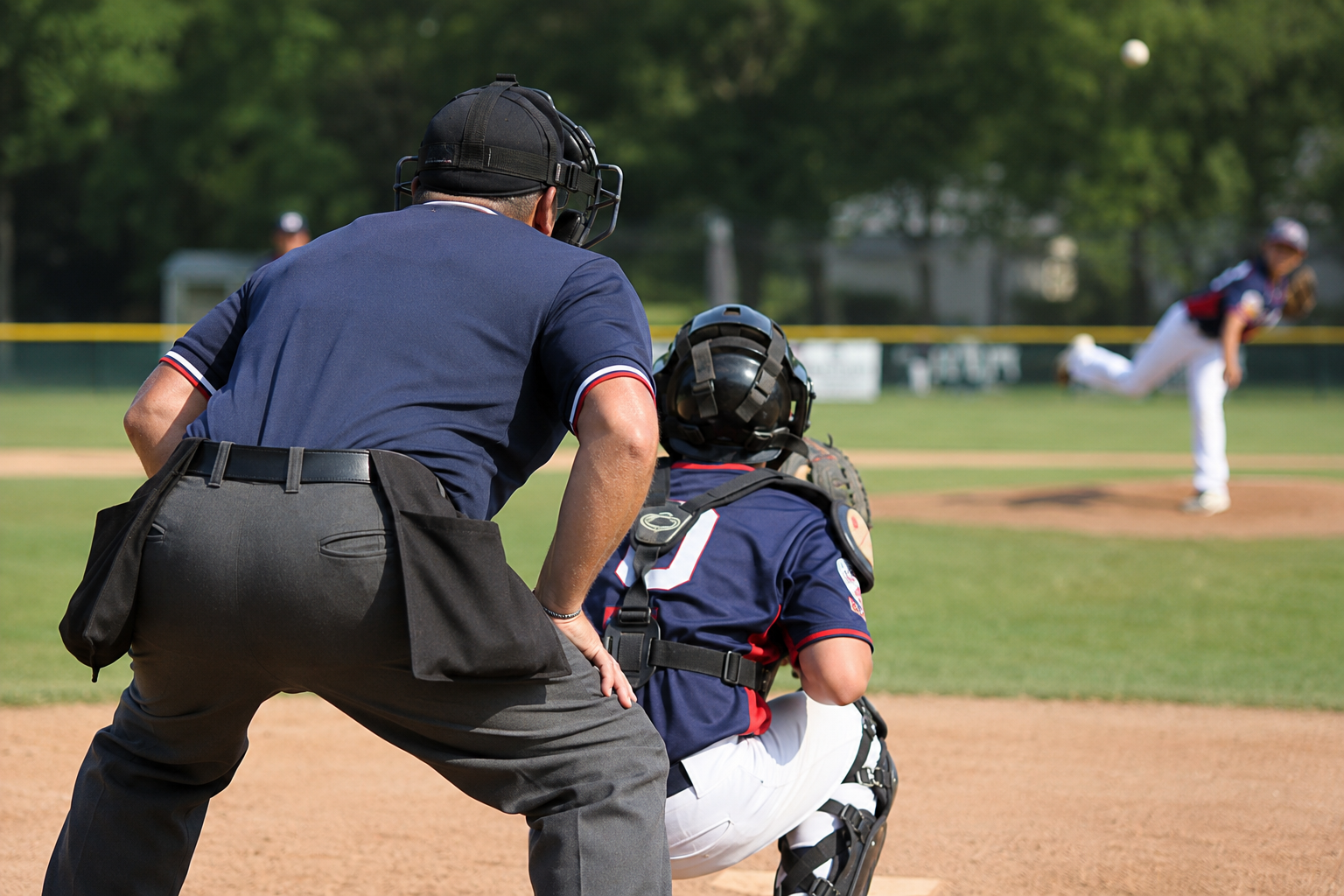
From the Local Field to Williamsport: What It Takes to Become a Little League World Series Umpire
For many baseball umpires, working the Little League Baseball World Series in Williamsport, Pennsylvania, represents one of the greatest honors in youth baseball officiating.
But nobody starts in Williamsport.
The journey usually begins on a local Little League field—working regular-season games, learning the rules, developing proper mechanics, attending training, accepting feedback, and volunteering countless hours to become a better official.
So, what does it actually take to become a Little League umpire, and how can an umpire eventually make it all the way to a Little League World Series?
Here's a look at the journey.
Step 1: Become a Local Little League Umpire
The first step is getting involved with a local Little League program.
Little League relies heavily on volunteer umpires to officiate games in communities throughout the United States and around the world. An aspiring umpire should contact their local league or district to find out about registration, training, background checks, and other local requirements.
You don't need to be an expert on your first day.
You do need to be willing to learn.
Beginning umpires should focus on developing a strong understanding of:
-
Balls and strikes
-
Safe and out calls
-
Fair and foul balls
-
Force plays and tag plays
-
Catch/no-catch situations
-
Interference and obstruction
-
Base-running responsibilities
-
Proper plate mechanics
-
Proper base mechanics
-
Game management
-
Communication with coaches and players
-
Little League-specific rules
The goal isn't simply to know the rules. A successful umpire must know how to apply those rules correctly under pressure.
Step 2: Work Games and Build Experience
There is no substitute for getting on the field.
The more games you work, the more situations you experience.
A new umpire may begin with younger divisions before progressing into more competitive baseball. Over time, experienced umpires learn how to anticipate plays, improve positioning, develop a consistent strike zone, communicate with partners, and manage difficult situations.
Little League specifically encourages umpires interested in Region and World Series opportunities to remain active as volunteer umpires at the local league and/or district level.
This is important because the pathway to Williamsport isn't simply about showing up for tournament season.
It starts with serving your local league.
Step 3: Take Training Seriously
If your goal is eventually working high-level Little League tournament baseball, training becomes extremely important.
Little League provides umpire clinics, mechanics clinics, academies, online educational resources, and other opportunities designed to improve umpire performance.
Umpires should continually work on:
Strike Zone Accuracy
Developing a consistent and dependable strike zone.
Positioning
Getting into the proper position and angle to see plays.
Rules Knowledge
Understanding both baseball rules and Little League-specific regulations.
Mechanics
Using proper signals, rotations, positioning, and crew communication.
Game Management
Handling coaches, players, unusual situations, and disagreements professionally.
Professionalism
Looking and acting like an official from the moment you arrive at the field.
Little League's current Umpire ID Camp evaluation criteria specifically include strike-zone accuracy, play positioning, style and form of calls, rules knowledge and application, and alignment with the organization's standards.
Step 4: Join the Little League Umpire Registry
An umpire with aspirations of advancing through the Little League tournament system should join the Little League Umpire Registry.
The Registry is free and provides access to umpire information, training opportunities, communications, and the tournament application process.
This becomes especially important once you're ready to pursue Region and World Series assignments.
Step 5: Work the Little League Tournament Trail
This is where the journey starts becoming more competitive.
An umpire who performs well locally may have opportunities to work postseason Little League tournament games.
That can mean progressing through assignments such as:
Local League → District → Sectional → State → Region
The exact tournament structure can vary, but Little League specifically encourages aspiring Region and World Series umpires to gain experience at district, sectional, and state levels of the Little League International Tournament.
These games provide valuable experience because tournament baseball creates a different environment.
The crowds can be larger.
The games become more important.
The pressure increases.
And umpire performance receives greater attention.
Step 6: Earn a Region Tournament Opportunity
This is one of the biggest milestones on the road to a World Series.
Under Little League's current selection process, an umpire must have worked a Region Tournament before becoming eligible to volunteer as an umpire at a Little League World Series event.
That means the Region Tournament isn't simply another assignment.
It is an important gateway.
Umpires working toward this level should demonstrate strong mechanics, rules knowledge, judgment, professionalism, consistency, teamwork, and the ability to handle high-pressure games.
Step 7: Consider Attending a Little League Umpire ID Camp
Little League also conducts Tournament Umpire Identification Camps.
These camps give umpires an opportunity to demonstrate their skills in front of evaluators and receive feedback.
Evaluations can include drills, simulations, and live-game situations covering areas such as strike-zone accuracy, positioning, mechanics, rules application, and overall umpire performance.
Attending an ID Camp is not required to receive a Region or World Series selection.
However, Little League says its Selection Committee gives stronger consideration to umpires who have progressed through the development pathway and whose performance it has had an opportunity to observe.
For an umpire serious about reaching the highest levels of Little League, an ID Camp can therefore be an important part of the development process.
Step 8: Apply for a World Series Assignment
Working a Region Tournament does not automatically send an umpire to a World Series.
Eligible umpires must apply for consideration through the Little League Umpire Registry.
For the 2026 tournament season, for example, Little League required tournament applications to be submitted through the Registry. Little League then conducted its selection process before notifying selected officials.
The application and selection process considers an umpire's experience and qualifications, and District Administrators may provide comments to the Selection Committee.
Little League International's Selection Committee works with its Region offices to evaluate nominated umpires before final selections are made.
Step 9: Get Selected for a Little League World Series
This is the moment many Little League umpires spend years working toward.
Selection is competitive.
In 2026, Little League announced that nearly 100 umpires were selected to work across its seven World Series tournaments. Little League describes World Series appointment as the highest honor it can bestow on an umpire.
And there isn't just one World Series opportunity.
Little League operates World Series tournaments across multiple baseball and softball divisions, creating opportunities for outstanding officials throughout the organization.
For those dreaming specifically of the famous Little League Baseball World Series in Williamsport, however, the path can be particularly competitive.
What Are Evaluators Looking For?
Making it to a World Series isn't just about how many years you've been an umpire.
High-performing officials must demonstrate the complete package.
That includes:
Rules Knowledge: You need to know the rules and correctly apply them.
Mechanics: You need strong positioning, movement, signals, rotations, and communication.
Strike Zone: Plate work needs to be consistent.
Judgment: Great positioning helps create great judgment.
Game Management: You must remain composed when the game becomes difficult.
Teamwork: Umpires work as a crew.
Professionalism: Your appearance, attitude, communication, and behavior matter.
Coachability: One of the biggest qualities an aspiring tournament umpire can possess is the willingness to accept feedback.
Little League itself encourages officials pursuing these opportunities to actively seek feedback at training events and tournaments and then use it to improve their performance.
The Road to Williamsport
There isn't a shortcut to becoming a Little League World Series umpire.
Think of the journey something like this:
Become a Little League Umpire
↓
Work Local League Games
↓
Study the Rules & Master Your Mechanics
↓
Attend Clinics and Training
↓
Join the Little League Umpire Registry
↓
Work District / Sectional / State Tournament Games
↓
Earn a Region Tournament Assignment
↓
Continue Training & Consider an Umpire ID Camp
↓
Apply Through the Umpire Registry
↓
Be Evaluated and Considered by Little League
↓
Earn a Little League World Series Assignment
For some umpires, that journey may take years.
That's part of what makes the accomplishment so meaningful.
Every World Series Umpire Started Somewhere
When you watch an umpire walk onto the field at a Little League World Series, you're seeing the result of far more than a few games.
You're seeing years of volunteering, training, studying, traveling, accepting criticism, working tournaments, helping young players, and becoming better one pitch at a time.
And almost every one of those journeys started in the same place:
A local baseball field and someone willing to put on the uniform and umpire a game.
If your dream is to someday umpire on one of Little League's biggest stages, don't worry about Williamsport on Day One.
Start with Game One.
Learn the rules. Work hard. Find experienced umpires who can mentor you. Attend clinics. Ask for feedback. Volunteer for games. Take every assignment seriously.
Then keep improving.
Get Ready for Your Next Game with Officials Depot
Whether you're preparing for your first Little League game or working toward your next tournament assignment, having the right equipment is part of being prepared.
Officials Depot provides umpire uniforms, shirts, pants, hats, shoes, protective equipment, ball bags, indicators, plate brushes, and other umpire accessories for officials at every stage of their career.
Because whether you're working a local Little League game or dreaming of someday walking onto the field at a World Series, every umpire deserves to step onto the field prepared.
Officials Depot
Equipping umpires from their first game to the biggest stages in baseball.
Helpful Little League Resources
For official information about umpire development and the tournament selection process, visit the Little League Umpires resource center and Little League's guide on how to get selected for a Region or World Series tournament.
2 comments
Babe Glumack
Worked Little league World Series 2000 Worked senior little league World Series 2003 Worked Junior World Series 2014 You guys out lined every thing a person has to do to get there great job
Chris Morris
Excellent and accurate article. I did a Junior League World Series and went through all of the steps, except that I was before the ID program so had a different camp run by a major league umpire instead. Get experience, go to clinics with on field instruction and work on your timing.